
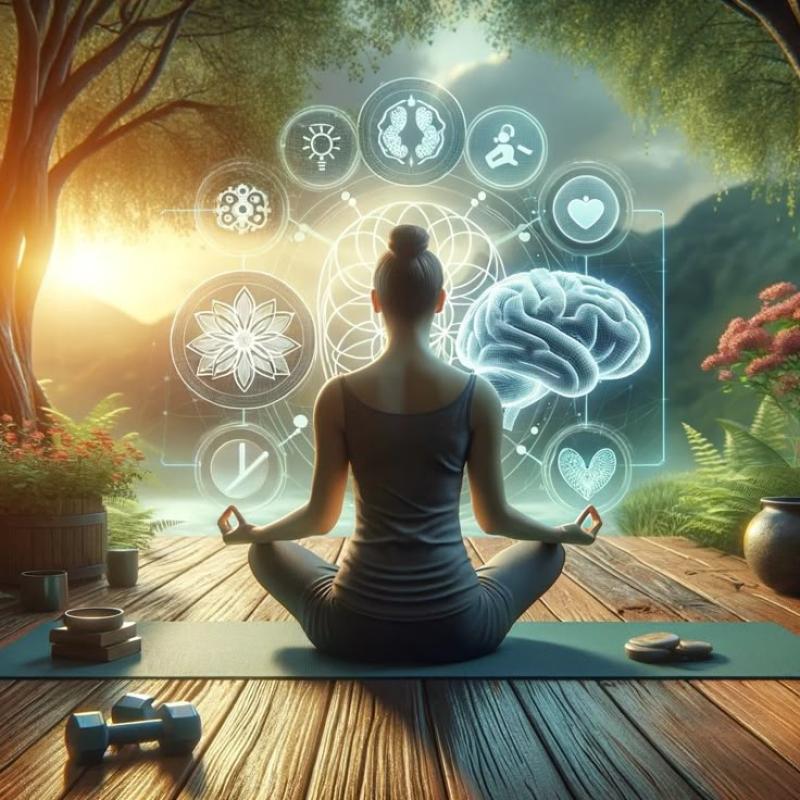
India has been the birthplace of meditation traditions for
thousands of years. From ancient sages practicing deep contemplation in forests
to modern meditation movements spreading across the world, the evolution of
meditation in India reflects a long journey of spiritual exploration and
scientific inquiry into human consciousness.
Today, many people visit a meditation center, attend meditation
camps, or search online for meditation centre near me to learn
meditation techniques. These modern practices are deeply rooted in a historical
timeline that stretches back to ancient civilizations, philosophical
traditions, and spiritual masters.
Understanding the timeline of the meditation movement in
India helps us see how meditation evolved from ancient spiritual practices into
a global movement for mental well-being and spiritual awareness.
Ancient Origins of Meditation (3000 BCE – 1500 BCE)
The earliest evidence of meditation in India can be traced
to the Indus Valley Civilization (around 3000–1500 BCE). Archaeological
findings show seals depicting figures sitting in meditative postures,
suggesting that early forms of meditation and yogic practices were already
being practiced.
These early practices were likely connected to nature
worship, spiritual rituals, and the exploration of consciousness. Although
written records from this time are limited, historians believe that meditation
was already an important part of spiritual life in ancient Indian culture.
These early traditions later influenced the development of
yogic philosophy and meditation systems.
Vedic Period and Spiritual Philosophy (1500 BCE – 500
BCE)
During the Vedic period, meditation became closely
associated with spiritual knowledge and philosophical inquiry. The sacred texts
known as the Vedas and later the Upanishads described practices
involving contemplation, concentration, and inner awareness.
These texts emphasized self-realization and the exploration
of the inner self. Meditation was considered a method to understand the deeper
nature of existence and the connection between the individual soul and
universal consciousness.
Ancient sages practiced meditation in forests and
hermitages, often spending years in silence and contemplation.
This period laid the philosophical foundation for later
meditation traditions in India.
Classical Yoga and Meditation Systems (500 BCE – 200 BCE)
A major milestone in the meditation movement came with the
teachings of Patanjali, the author of the Yoga Sutras of Patanjali.
Patanjali organized meditation and yoga practices into a
systematic framework known as the Eight Limbs of Yoga. One of the most
important stages in this system is Dhyana, or meditation.
The Yoga Sutras explained how individuals could train the
mind through concentration, meditation, and disciplined practice.
This structured approach made meditation more accessible and
helped establish it as a scientific method for self-development.
Even today, many modern meditation programs follow
principles described in Patanjali’s teachings.
Buddhist Meditation Movement (500 BCE – 200 CE)
Another major influence on meditation in India came from the
teachings of Gautama Buddha.
The Buddha taught mindfulness and meditation as a path
toward liberation from suffering. His meditation techniques focused on
awareness of breath, observation of thoughts, and deep mindfulness.
Monasteries and spiritual centers were established where
monks practiced meditation and taught it to others.
Institutions such as Buddhist Sangha helped spread
meditation practices throughout India and later across Asia.
Today, many meditation communities and institutions such as the
buddhist centre continue to teach mindfulness meditation inspired by
Buddhist philosophy.
Medieval Meditation Traditions (700 CE – 1700 CE)
During the medieval period, meditation continued to evolve
through various spiritual movements and traditions in India.
Saints and spiritual teachers in the Bhakti movement
emphasized devotion, chanting, and contemplation as forms of meditation.
Spiritual masters taught that meditation could be practiced
not only in isolation but also through devotion and service.
Yogic traditions continued to develop during this time,
combining physical yoga practices with meditation techniques.
Many spiritual seekers traveled across India to learn
meditation from gurus and sages living in ashrams and monasteries.
Revival of Meditation in Modern India (1800 – 1950)
The modern revival of meditation began during the 19th
century when Indian spiritual leaders started introducing meditation to both
Indian and global audiences.
One of the most influential figures of this period was Swami
Vivekananda. Through his teachings and lectures, he introduced yoga and
meditation to the Western world.
Vivekananda emphasized that meditation is a scientific
method for controlling the mind and discovering inner strength.
Another influential thinker was Sri Aurobindo, who
developed the concept of integral yoga, combining meditation with personal
transformation and spiritual evolution.
These leaders played an important role in presenting
meditation as a universal practice rather than a purely religious activity.
Global Expansion of Meditation (1950 – 1990)
The second half of the 20th century witnessed a global
expansion of meditation movements originating from India.
Teachers such as Maharishi Mahesh Yogi popularized
meditation worldwide through the practice of Transcendental Meditation.
Meditation became increasingly recognized for its
psychological and health benefits.
Another influential teacher, Osho, introduced dynamic
meditation techniques and encouraged individuals to explore meditation in
creative ways.
During this time, meditation centers began appearing in many
countries, and interest in mindfulness and consciousness research grew rapidly.
Rise of Pyramid Meditation Movement (1990 – Present)
In recent decades, new meditation movements have emerged in
India, combining traditional meditation practices with innovative approaches.
One of these developments is the Pyramid Spiritual
Societies Movement, which promotes meditation practices inside pyramid
structures.
These organizations established pyramid yoga center
and pyramid yoga centre facilities where individuals practice pyramid
yoga meditation.
Inside a pyramid for yoga, practitioners sit quietly
and observe their breath, believing that the pyramid shape enhances
concentration and inner awareness.
Meditation communities also organize meditation camps
and retreats where people can practice meditation intensively.
Many individuals who search online for meditation near me
or meditation centre near me discover these centers and begin their
meditation journey.
Meditation and Social Service
Modern meditation movements in India often combine spiritual
practice with social responsibility.
Meditation communities actively participate in charity
activities and community service programs.
These initiatives may include educational programs, food
distribution drives, and environmental awareness campaigns.
Meditation organizations frequently organize charity
fundraising programs designed to raise money for charity.
Volunteers help organize events and campaigns to raise
funds for charity and support social welfare initiatives.
Creative charity event ideas, group charity
activities, and fund raising program initiatives allow meditation
communities to contribute to society while spreading awareness about
meditation.
Corporate organizations also participate in corporate
charity activities and team charity event ideas, combining
meditation workshops with social service initiatives.
These programs demonstrate how meditation movements today
focus not only on personal growth but also on collective well-being.
Meditation in the Digital Age
In the 21st century, meditation has entered a new phase with
the help of digital technology and global communication.
Online meditation sessions, virtual workshops, and mobile
applications have made meditation accessible to millions of people.
Many individuals now begin their journey simply by searching
online for meditation near me or meditation centre near me.
Meditation centers continue to organize meditation camps,
community gatherings, and mindfulness programs to help people integrate
meditation into daily life.
Scientific research has also strengthened the credibility of
meditation by demonstrating its benefits for stress reduction, mental health,
and emotional well-being.
Conclusion
The timeline of the meditation movement in India reflects a
remarkable journey spanning thousands of years. From the spiritual practices of
the Indus Valley Civilization to the philosophical teachings of Patanjali,
the mindfulness traditions of Gautama Buddha, and the modern meditation
movements of the 20th and 21st centuries, meditation has continuously evolved
while maintaining its core purpose—awakening human consciousness.
Today, meditation is practiced in meditation center
communities, pyramid yoga center facilities, and spiritual retreats
across India and the world.
Through meditation camps, mindfulness education, and
community initiatives such as charity activities and charity
fundraising, the meditation movement continues to inspire millions of
people.
As interest in mental well-being and spiritual growth
continues to grow, meditation remains one of India’s most valuable
contributions to global culture and human development.
Comments (0)
No comments yet. Be the first to share your thoughts!
Leave a Comment
Join the conversation!
You must be logged in to post a comment.
Login to Comment